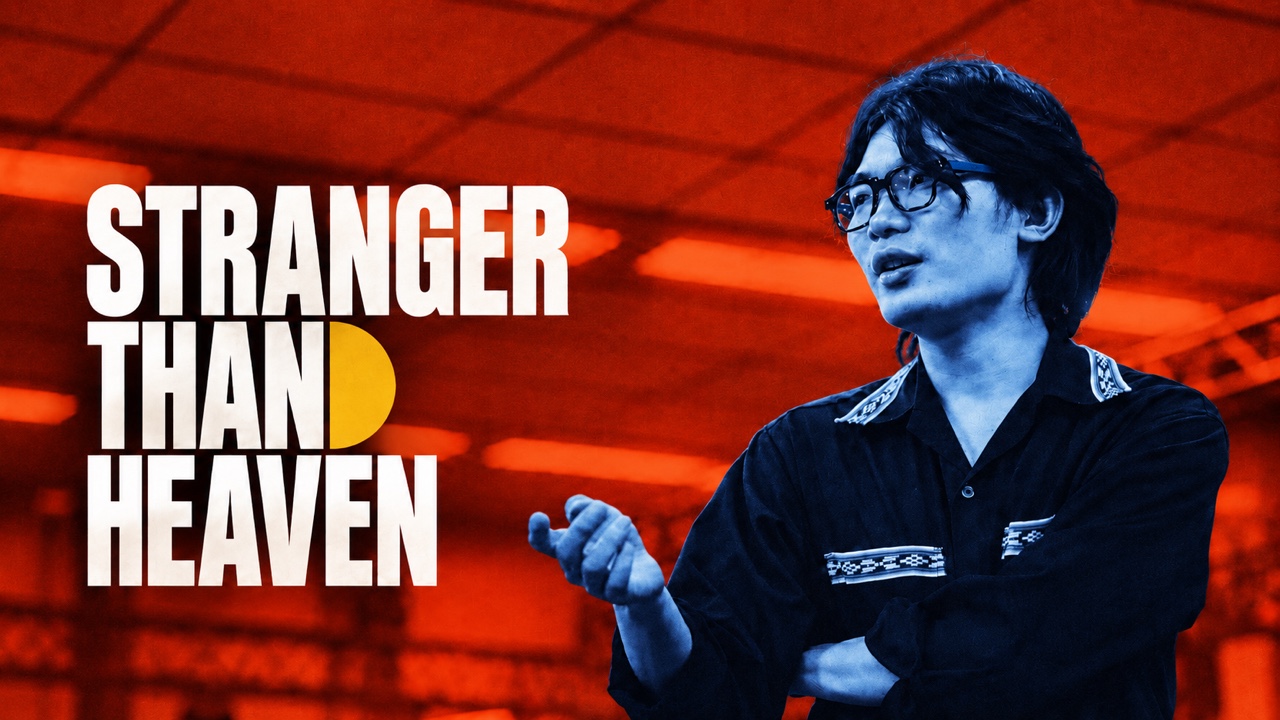

After playing the Stranger Than Heaven demo at gamescom, I interviewed the game’s director, Mikinobu Abe. We spoke about the historical periods behind its story, the place of music in its protagonist’s life, and what starting a new IP means for a studio so closely associated with Yakuza and Like a Dragon.
Choosing the historical periods
The game covers five eras, from imperial Japan through the economic crash, the war and the American occupation to the post-war boom. To me, Japanese games often seem cautious about those middle periods. What made you decide to walk straight into them?
Mikinobu: When we were creating this game, one of our first goals was to depict 50 years of this man’s life. It was never an intentional choice to say, “We want this guy to be in wartime.”
As we wrote the story of our new protagonist, there were key moments in his life and environments he needed to pass through for narrative reasons. That led us to decide which cities and eras would let the character shine within the story.
So, again, we never started by saying, “We want to do wartime.” These eras were chosen purely for narrative reasons.
Recreating the cities
Which city or era was the hardest to recreate, whether from a research or a technical perspective?
Mikinobu: To be completely honest, all of them were hard. One of the biggest challenges was that our previous games were modern dramas, set in decades much closer to the present.
This time, we needed to do a lot of research to create the 1915 version of Kokura. Of course, we can’t travel back in time and see what it was like, so we researched it extensively.
The key point is that we weren’t trying to recreate the map with complete historical accuracy. We wanted to draw inspiration from what it was like back then: the styles and the way people behaved. We took that inspiration and adapted and modernised it to fit our narrative and gameplay experience. That was a very challenging part of making this game.
Music and show business
There is supposed to be a system where you gather rumours in the street, find singers and performers, and collect ordinary sounds as samples to build music around. I haven’t found much detail about it, so first I want to check whether that information is correct. What can you say about this part of the game?
Mikinobu: I can’t go into too much detail yet, but there will be a lot more information about it.
Our protagonist, Makoto Daito, comes from America to Japan in 1915. He starts out as a stranger in Japan and experiences a lot of discrimination. The only way he could make money, survive and express himself was through music, because music was the one thing that was fair: the other things he faced didn’t matter there.
Music was therefore central to the experience we wanted Daito to go through. If we go back to its roots, music in those days was essentially a live show. We didn’t have much tape-recording technology — I mean, they did, but it was more about live shows.
We wanted him to start out as a promoter. As he moves through the eras, the character matures and starts a business. Eventually, you get this whole experience of being a promoter in Japanese show business in each era.
A new combat system
The directional parrying punishes you for reacting on the wrong side. To me, your previous games felt more focused on learning combos than on this kind of reaction. And I’m not even talking about Like a Dragon. So are you knowingly making a game that a big part of your audience will find difficult to master or unfamiliar to play?
Mikinobu: Our starting point was to treat Stranger Than Heaven as a brand-new game and a brand-new IP. From there, we asked what the best way would be to depict Daito’s life and let the player experience what he goes through.
We wanted the controls and combat to be very intuitive and immersive, so that the player’s learning curve would almost match the way Daito matures within the game.
Once players get the hang of it, they can fight more cleanly and stylishly. There are also a lot of weapons to choose from. In that sense, the player synchronises with Daito through both the combat and the narrative.
I think the immersion you get from the new combat system and Daito’s story makes for a very distinctive experience.
How much absurdity remains?
I enjoyed the combat and the different weapons. Even in that short section, it felt immersive. Yet the demo consisted entirely of three combat scenarios. Your games are also famous for the contrast between very serious stories and completely absurd or funny moments. Stranger Than Heaven looks serious. Is that absurdity still there?
Mikinobu: Again, we approached this as a brand-new game. One of the key questions was how to depict each era and city in the way we wanted players to experience them.
While researching Japanese culture and people’s lifestyles back then, we found a lot of interesting things that even we, as Japanese people, didn’t know. We took inspiration from those historical episodes and wrote stories around them.
Sometimes you might call those stories comedy, but many have a darker tone. In terms of expectations, I would say comedy is less of a focus, and the game is more serious.
Food and other city activities
What can you say about activities in the city outside combat? I think I saw people eating in some trailers. Food has always been part of Yakuza: you could visit a food stand and have some hot soup. Will that still be part of this game?
Mikinobu: One of the things RGG Studio always depicts is the lifestyle: what it feels like to be in a particular city. Food is a big part of that. In this demo, I’m sure you had an opportunity to use the eating mechanic. I think you had a rice bowl.
Yes, as a healing mechanic. I had to use it quite extensively. (laughs)
Mikinobu: Of course, those things are an important part of the game. We also have minigames. I won’t go into too much detail, but many were inspired by things that existed back then.
Our previous games tended to be modern dramas, with a lot of minigames, especially flashy ones. This time, we chose them more to depict what it was like to live in each city. They aren’t as flashy as those in our previous titles, but there are minigames for you to enjoy.
A new IP and its relationship to the previous games
Would you like to add anything else?
Mikinobu: I know that some keywords appeared in the trailers that fans might recognise from our previous games. But one thing I can assure you of is that you will be able to enjoy Stranger Than Heaven without any knowledge of those games.
Our intention was to create a brand-new game and a brand-new IP. Every aspect of the game — all the mechanics, the story and the cities — was built from scratch. It is something completely new.
I hope players who have never experienced our previous games will play this one. I would be really happy if that happens.
Thank you for the interview. We’re looking forward to the full game!
Mikinobu: Thanks for the interview, too.