
After discovering Afterburn through inbento on Switch, I started following the studio more closely. At gamescom, I talked with Luke Spierewka, head of the studio, about the studio’s plans for Nintendo’s platform, the business of selling premium mobile games, and the difficulty of making puzzles that welcome new players without boring experienced ones.
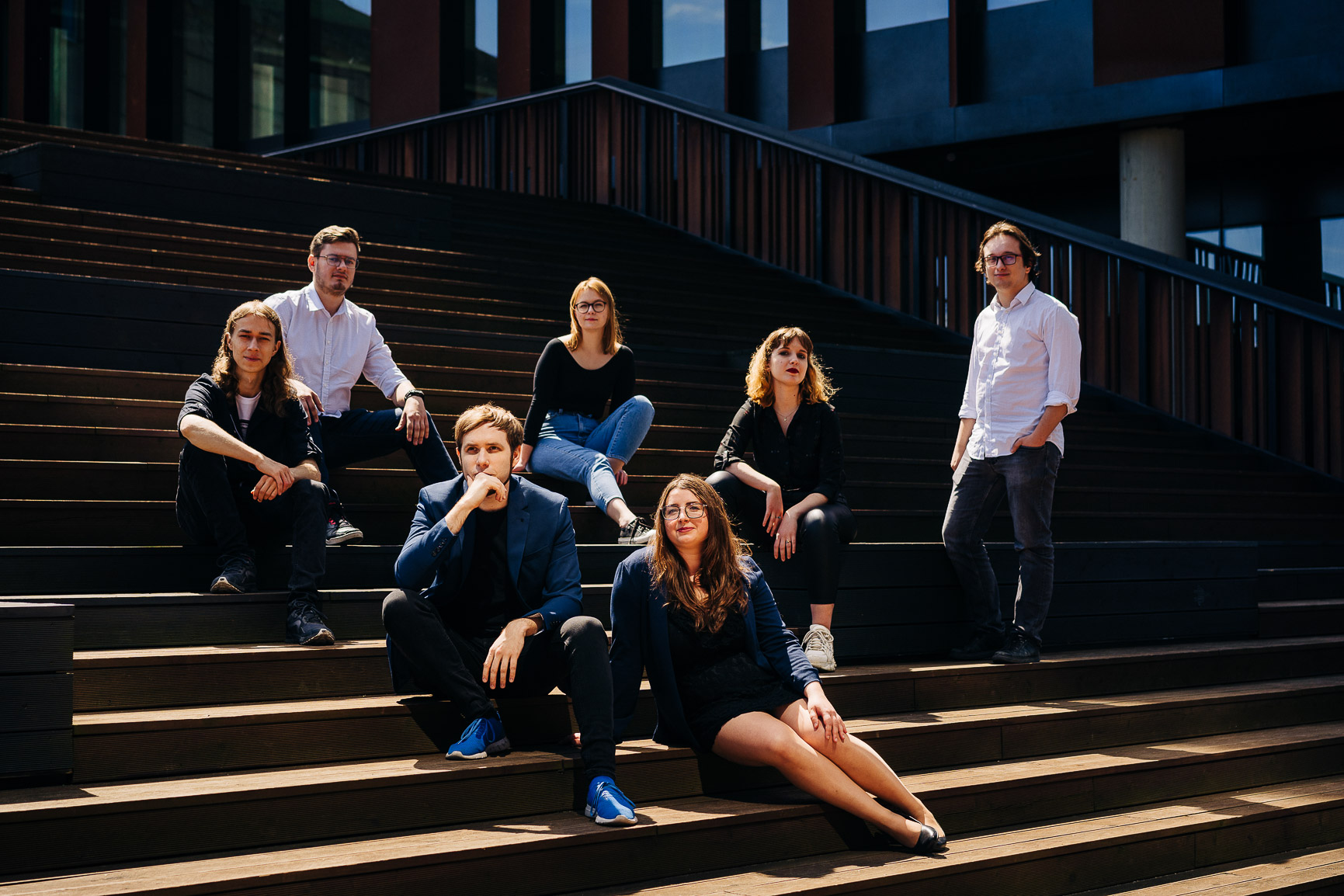
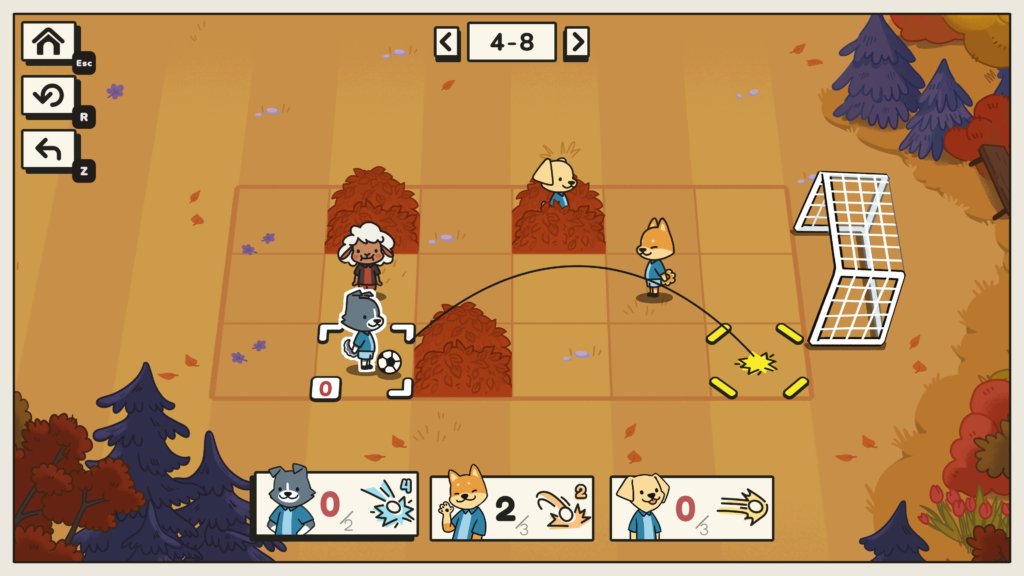
Afterburn is a small studio based in Łódź, Poland, specialising in puzzle games. Its games include Golf Peaks, inbento, Railbound and Pup Champs. You can explore its work on the official website or the studio’s Steam page.
1. Bringing the games to Switch
I read your recent newsletter, and you’ve outlined plans to focus more on porting your games and perhaps have a calmer period. What does that look like for Afterburn?
Luke: For us, 2026 is a year when a lot is happening, both at work and personally. There just isn’t much new development.
We’re currently porting Pup Champs to Nintendo Switch, something we’ve wanted to do for a long time. We feel the platform aligns with our values, and many players interested in our games are Nintendo gamers. We wanted to do it ourselves to have more control over how our games are represented there and be more responsive with patches.
Later, we’ll introduce some quality-of-life patches for our previous games. As for future games, we’d possibly like to have them available on Switch at launch.
There has usually been a delay, right?
Luke: Usually, we’ve launched on Steam and mobile because those are platforms we know well and we already have a foothold there. And Switch would always come later. We want to shorten that gap in the future.
I actually discovered your games through Switch. I started with inbento because it looked very nice, and I’ve been hooked ever since.
2. Games that let you finish — or leave
Your games end. They don’t have a daily bonus, a currency or forty hours of padding. With so much monetisation in puzzle games, that feels like a deliberate refusal of that model. Was it ever a hard business decision, or was it never up for debate?
Luke: I think part of it is wanting to make games we enjoy playing ourselves. Personally, I don’t enjoy free-to-play games with daily mechanics that make you feel compelled to log in every day.
A while ago, a video went around on Bluesky. Somebody launched Disney Solitaire after installing it and not touching it for a year. For two minutes, it just threw banners at them: a new character, daily roulette, daily puzzles, new things in the store. It kept coming and coming.
These games become platforms for endless content. We want a simple interaction: you buy a game from us or, with inbento and Pup Champs on mobile right now, have a single Crunchyroll subscription. That’s it. We don’t want to nag you about DLC, daily challenges or an in-game system where you unlock things.
You could easily turn any of our games into an endless Candy Crush Saga-style game. The hardest part is creating the structure. We use Unity, and I would say we spend 80% of our development time figuring out how the game should look, feel and work, including its performance.
Making content is relatively simple by comparison, although you still need to play through the levels and arrange them in a structure that makes sense. We create levels throughout development. Once we have the tools and editor, we could produce new inbento puzzles ad nauseam every month if we decided to.
That isn’t what interests us as a studio. With games that last over a hundred hours, I sometimes feel as though you’re stuck in that one game. I enjoy short games: you play for a while and move on, perhaps to another of ours or somebody else’s. You don’t even have to finish them. If you get tired of an Afterburn game, that’s okay. Find an ending point that works for you and move on. I think that works better for players and the economy, because people can enjoy games from different studios.
We also started putting an “unlock all levels” button into our games. If a level makes you angry and you don’t want to force yourself through it, you can unlock everything and play whatever you want.
3. Making premium mobile games work
You’ve been selling premium puzzle games on mobile, without ads or microtransactions, for years…
Luke: Since 2018.
A lot of people in the industry would tell you that shouldn’t work. This is quite a personal business question, but how does it work? How do the games sell on mobile?
Luke: It depends on the year and the state of the market. When we started with Golf Peaks in 2018, people already said releasing a premium mobile game was dumb: premium had worked in 2013, but now only free-to-play worked. We were a tiny studio without much experience, making our first mobile launch, with no contacts at Apple or Google.
For us, it was a happy coincidence. Golf Peaks wasn’t necessarily about making money. When somebody asked about our games, we wanted to show it and say, “This is the game we’re making, and this is the quality we can achieve right now.” We didn’t want to worry about free-to-play, ad networks or in-app purchases. We wanted people to pay once and try the game.
We chose premium to make things simple for ourselves, but it sold well enough to cover development costs. That showed us premium could work, so we stuck with it. People praised it in reviews: “I can buy it once, and it’s a full game. There are no ads, no stores, no in-app purchases, nothing.” They found that refreshing in 2018, when we launched Railbound in 2022, and I think they still do now.
With Pup Champs, you have tried a different model.
Luke: We tried a try-before-you-buy model: the game was free, with a single in-app purchase to upgrade to the full version. I wasn’t happy with how that performed, and I kind of wish we had stuck with premium. I think it makes development and implementation simpler for us, and players know what they’re signing up for.
It feels like a sine wave: sometimes premium is on the rise; sometimes it feels like it’s dying and everything is free-to-play. I’m not analysing the market as closely as I used to, but I feel people are becoming more interested in premium mobile games because they’re tired of the alternative.
I used to play a lot of mobile games. Now I feel overwhelmed by what’s available and featured in stores: the same games with new content updates, a Halloween patch for whatever. I don’t want to be on that treadmill.
They want to be more intentional about it.
Luke: People have so much going on in their lives: work, family, kids, everything else. You don’t want to feel forced to play a solitaire game because there’s an XP bonus for playing two sessions a day. I feel we’re getting past that. That’s my estimate.
For the past couple of years or so, I’ve been seeing big PC hits come to mobile as premium games: games like Dredge, Slice & Dice. They aren’t bothering with all those systems. I find that encouraging, and I hope the platforms get better.
4. Welcoming visuals, demanding puzzles
Your games look gentle and inviting — you could call the graphics cosy — but the puzzles themselves can be quite hard. I almost rage-quit inbento at one point. As far as I remember, there wasn’t an “unlock all levels” button then.
Luke: It was added about two years ago.
Do you worry about the gap between the presentation and the actual gameplay? Was adding that button a direct response to it?
Luke: It’s something we’re always mindful of. I tend to think of our games as “all-ages games”, and that is something I’m passionate about. I want casual and core players to enjoy them, whether they’re five, eighteen or sixty-five. Experienced puzzle players shouldn’t feel patronised, but children playing their first or second game need time to learn the mechanics. Finding that balance is very hard.
We want welcoming design and visuals without making baby games where everything is pastel and has no edges. In inbento, the inviting style accompanies a slightly bittersweet story about parenthood. I’m really happy with that flavour; I think it makes the game more complete. Our later games didn’t quite manage to hit it in the same way.
A lot of people say they bounce off inbento around World 9 out of 12. The difficulty also ties into the story. I personally see two acts: the first follows the child from birth to adulthood, and after a longer story section, the child is on their own and the difficulty rises a lot. I want people to reach Act Two — roughly halfway through — fairly easily on the main path. Now you can also unlock all the levels just to see the story.
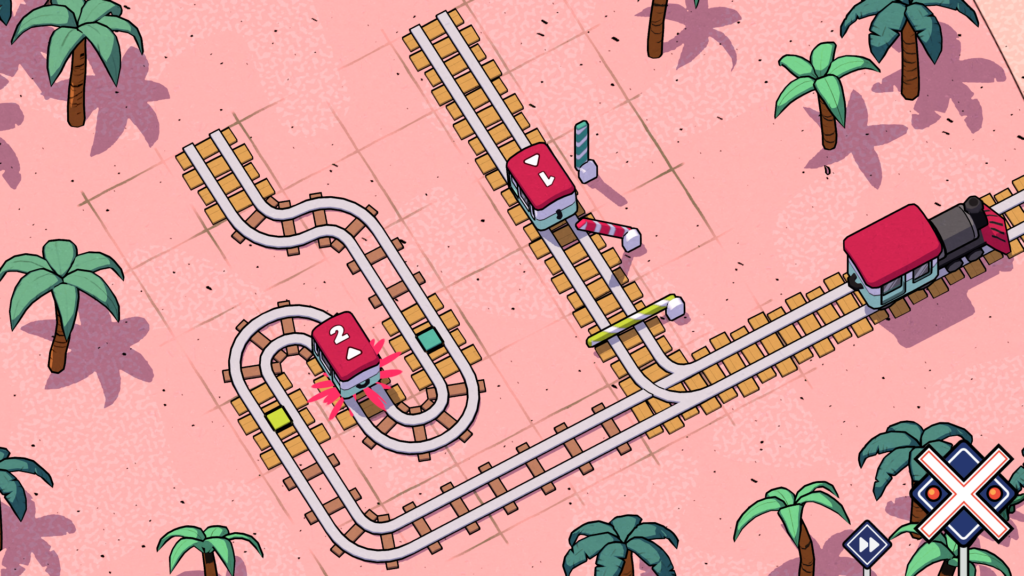
We’ve tried different approaches. And I think Railbound probably handles it best, with a fairly mild main path and optional challenges. I’ve never been fully satisfied with these approaches, though. Ideally, the main path should teach the mechanics and test your knowledge, rather than consist entirely of tutorials, with harder puzzles on the side. Finding the right balance is still a struggle.
When I played inbento, it wasn’t clear to me whether I could skip anything. I discovered it almost by accident when I got stuck, but I never worked out the system. In the end, I got through everything — although sometimes I had to sleep on a puzzle.
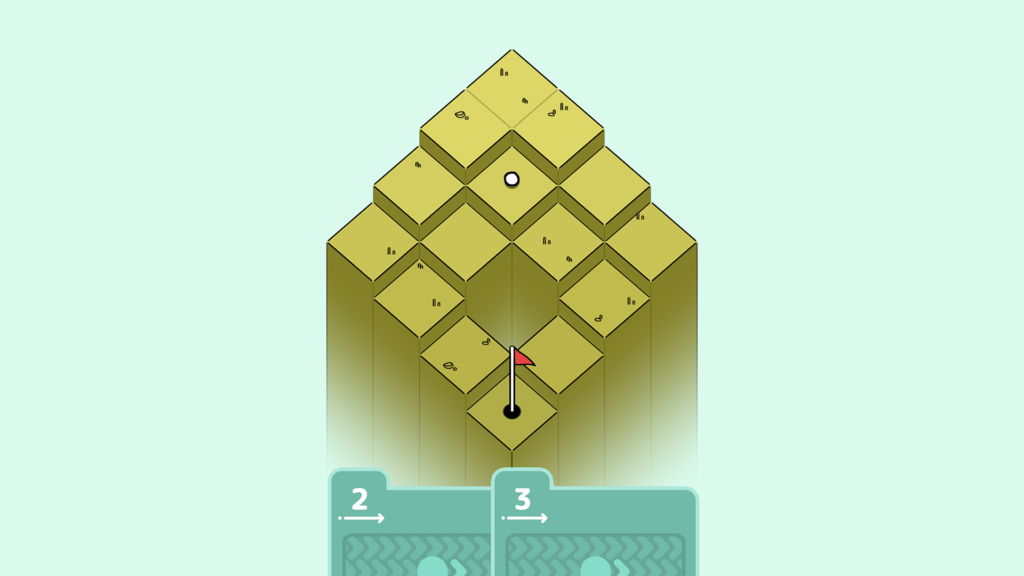
Luke: inbento is a tricky one. It feels like a simple game visually, but is in fact quite complex. The way I like to think about it is that most of our games take place in 2D, but inbento is the one that looks 2D and is actually a 3D game. You have to think about the layers and the far-reaching consequences of your moves.
I think that’s why it trips more people up. It looks simple, but it’s a bit like a Rubik’s Cube: you need to think several moves ahead, more than in our other games. Despite the small scale of the levels — or sometimes because of it — it ends up being trickier than expected.
5. Building a studio in Łódź
When people outside Poland talk about Polish games, they mostly think about CD Projekt, Techland and 11 bit. You’re a small indie studio in Łódź. What are the advantages and disadvantages of being based there, and how did you end up in the city?
Luke: It was a combination of decisions and accidents. I came to Łódź to study at a technical university with a game-development course. That was a deliberate decision. There’s a small scene there: indie developers, roughly monthly meetups and a community.
Then I spent two years in Warsaw working at CD Projekt, which gave me a lot of experience. When I was trying to establish my own studio, we looked at different possibilities. Choosing Łódź came down to a confluence of circumstances.
I knew the community, had lived there and liked it. It’s also much cheaper than Warsaw, which is roughly twice as expensive for housing and things like that. We sell our games on Steam, so we get the same money regardless of where we live. Choosing a cheaper city works out better for us.
We also heard about an incubation programme where we could get an office in a creative-industry incubator. It was ridiculously cheap: about €50 a month for our own office, with electricity and everything else included.
The other companies weren’t game developers: there were architects, artists, fashion designers and other creative businesses. It was a really nice place. We had some money saved and gave ourselves two years in the incubator to see whether we could establish ourselves.
And it grew into a successful studio, so it worked out.
Luke: I wouldn’t recommend the same path to everyone without question. I think we were very lucky: we found those opportunities at just the right time and had saved money ourselves.
Because of all that, we could make our first game, Golf Peaks, with less pressure. Its goal wasn’t to make money. It was to prove to ourselves and everyone else that we could ship a good-quality game that people enjoyed. I feel that making it with those constraints helped it work out. It did make money, and it let us continue making more projects.
6. Puzzle games worth being jealous of
Finally, which puzzle game by somebody else made you a little jealous?
Luke: Snakebird, one hundred per cent. It’s a really, really good puzzle game. It might be one of my favourites.
You didn’t hesitate there.
Luke: In a similar space to ours, it’s Snakebird, no doubt. I feel too few people have played it. It’s a very tightly designed game. I know it scares some people off because it starts out very difficult and then progresses from there, but it’s smartly designed and works really well.
The second one is Blue Prince. When my wife and I played it last year, it was the only thing we could think about for two months.
That’s dedication.
Luke: I’m happy with the games we make, but I probably couldn’t come up with something that wild. I think you know within five hours whether it’s a game for you. But I honestly think everybody should try it.
Thank you for the lovely interview.
Luke: Yeah. Thank you for having me!
This interview has been edited for length and clarity.